According to SPER Market Research, the Global Silicone Anodes Market is estimated to reach USD 9.92 billion by 2034 with a CAGR of 7.31%.
Introduction and Overview
The report includes an in-depth analysis of the Global Silicone Anodes Market, including market size and trends, product mix, Applications, and supplier analysis.
The Global Silicone Anodes Market was valued at USD 4.9 billion in 2024, and it is expected to rise at a 7.31% CAGR from 2025 to 2034. The silicon anodes market is expanding rapidly, driven by several key trends. The growing electric vehicle sector is fueling the need for more efficient energy storage, while rising demand for high-energy-density batteries is pushing manufacturers toward advanced silicon-based solutions. Continuous declines in battery costs are making next-generation materials more commercially viable. Supportive government policies and clean-energy regulations further encourage the adoption of improved battery technologies. At the same time, ongoing advances in silicon anode materials such as enhanced stability, higher capacity, and improved cycle life are strengthening their potential to replace or complement traditional graphite anodes in modern lithium-ion batteries.
By Material Insights
The silicon anodes market includes materials such as nanoparticles, nanowires or nanotubes, silicon-carbon composites, silicon oxide, thin films, and other emerging forms. Among these, silicon-carbon composites hold a prominent position due to their strong structural integrity and reliable cycling behaviour. They effectively address the expansion challenges associated with pure silicon during charging and discharging, offering improved conductivity and mechanical strength. Their ability to use a carbon matrix to cushion silicon’s volume changes while maintaining electrical pathways makes them especially suitable for next-generation electric vehicle batteries, which require durable, high-performance energy storage solutions.
By Battery Type Insights
The silicon anodes market is classified by battery type into lithium-ion, lithium-polymer, solid-state, and other advanced chemistries. Lithium-ion batteries remain the primary application as they are widely used in electric vehicles, consumer electronics, and large-scale energy storage systems. Silicon anodes can be integrated into existing lithium-ion manufacturing lines with only minor process adjustments, making adoption easier for battery producers. Incorporating silicon into lithium-ion cells enhances energy density, supporting longer driving ranges and extended device lifespans. Continuous advancements in scalable, commercially viable silicon-enhanced lithium-ion cells are accelerating market growth. Silicon anode technology also enables improved electrode structures, allowing manufacturers to adapt traditional graphite designs by blending them with silicon-based materials for superior performance.
By Application Insights
The silicon anodes market is divided by application into electric vehicles, consumer electronics, energy storage systems, medical devices, aerospace and defence, and other sectors. Electric vehicles represent the leading application due to the automotive industry increasingly relies on high-energy, long-range battery technologies. Silicon-enhanced anodes offer substantially higher capacity than traditional graphite, enabling improved driving range and overall battery performance. Automakers are forming strategic partnerships with battery and material suppliers to integrate silicon anodes into future EV platforms. As the industry continues to prioritize longer battery life, faster charging, and superior efficiency, silicon-based anode materials are becoming essential for meeting next-generation electric vehicle requirements.
Regional Insights
North America remains a key market for superplasticizers due to its well-established construction industry, strong technological adoption, and emphasis on high-quality building materials. Ongoing infrastructure repair, modernization efforts, and maintenance activities continue to fuel the need for high-performance concrete additives across the region. At the same time, growing interest in sustainable construction and green building certifications is driving demand for innovative, low-emission superplasticizers. This trend is further supported by significant public investment in smart cities, commercial developments, and large-scale infrastructure projects. In particular, funding under the U.S. Bipartisan Infrastructure Law is accelerating upgrades and expansions, reinforcing the region’s reliance on advanced concrete solutions.
Market Competitive Landscape
The competitive landscape of the silicon anodes market is characterized by a small group of specialized companies, including Sila Nanotechnologies, Amprius Technologies, Wacker Chemie, Enovix, and Enevate Corporation. These firms are advancing material performance and scaling up production to meet growing industry demand. Competition centers on improving energy density, extending cycle life, and ensuring compatibility with existing lithium-ion manufacturing processes. Companies are also working to overcome silicon’s inherent expansion challenges through innovative engineering approaches. As electric vehicles and portable electronics require higher-performing batteries, market players continue to develop next-generation silicon anode solutions that balance reliability, efficiency, and manufacturability.
Recent Developments:
â— In May 2025, Volt14, a battery technology startup, secured pre-Series A funding aimed at expanding production of its silicon-rich anodes and strengthening its technical team in preparation for the commercial launch of its next-generation battery materials.
â— In March 2025, Amprius Technologies delivered its SiCore cylindrical silicon-anode cell to a light electric vehicle manufacturer listed in the Fortune 500. The company highlighted that the cell was assessed for providing higher energy density, extended cycle life, and noticeably greater capacity compared to standard cells.
â— In February 2025, NEO Battery Materials advanced work with Rockwell Automation to automate operations at its new silicon-anode facility in Windsor, Ontario. The initiative focuses on addressing regional supply chain gaps with scalable, advanced manufacturing capabilities.
◠In January 2025, NEO Battery Materials gained attention with the announcement of plans to build Ontario’s first advanced silicon-anode production plant in Canada, designed for significant annual material output.
◠In November 2024, POSCO Group completed its silicon-anode materials facility in Pohang. With substantial production capacity, the plant is positioned to support large-scale EV manufacturing and marks the completion of POSCO’s full silicon-anode production chain, enhancing its competitiveness in next-generation battery materials.
Scope of the report:
Report Metric Details
Market size available for the years 2021-2034
Base year considered 2024
Forecast Period 2025-2034
Segments Covered By Material, By Battery Type, By Application
Regions Covered North America, Latin America, Asia-Pacific, Europe, Middle East & Africa
Companies Covered Amprius Technologies, Enovix, Enevate Corporation, Sila Nanotechnologies, Wacker Chemie
Key Topics Covered in the Report
◠Global Silicone Anodes Market Size (FY’2021-FY’2034)
â— Overview of Global Silicone Anodes Market
â— Segmentation of Global Silicone Anodes Market By Material (Silicon nanoparticles, Silicon nanowires/nanotubes, Silicon-carbon composites, Silicon oxide/SiOx, Silicon thin films, Others)
â— Segmentation of Global Silicone Anodes Market By Battery Type (Lithium-ion batteries, Lithium-polymer batteries, Solid-state batteries, Others)
â— Segmentation of Global Silicone Anodes Market By Application, (Automotive, Consumer electronics, Energy storage systems, Industrial, Aerospace and defense, Others)
â— Statistical Snap of Global Silicone Anodes Market
â— Expansion Analysis of Global Silicone Anodes Market
â— Problems and Obstacles in Global Silicone Anodes Market
â— Competitive Landscape in the Global Silicone Anodes Market
â— Details on Current Investment in Global Silicone Anodes Market
â— Competitive Analysis of Global Silicone Anodes Market
â— Prominent Players in the Global Silicone Anodes Market
â— SWOT Analysis of Global Silicone Anodes Market
◠Global Silicone Anodes Market Future Outlook and Projections (FY’2025-FY’2034)
â— Recommendations from Analyst
Global Silicone Anodes Market- By Material, By Battery Type, By Application - Regional Outlook, Competitive Strategies and Segment Forecast to 2034
1. Introduction
1.1. Scope of the report
1.2. Market segment analysis
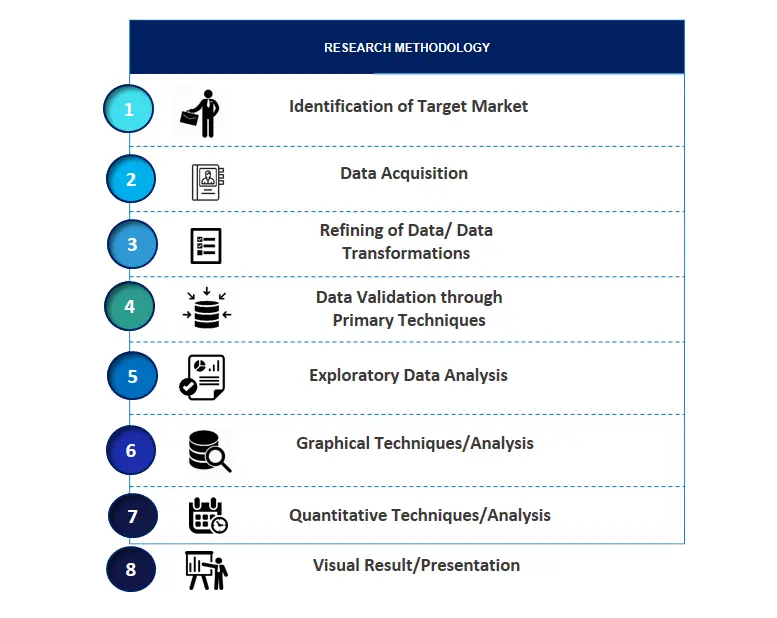
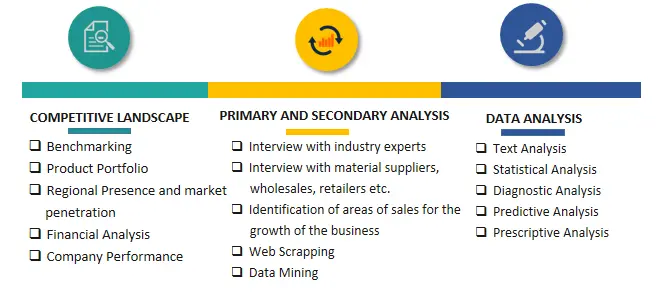
2. Research Methodology
2.1. Research data source
2.1.1. Secondary Data
2.1.2. Primary Data
2.1.3. SPER’s internal database
2.1.4. Premium insight from KOL’s
2.2. Market size estimation
2.2.1. Top-down and Bottom-up approach
2.3. Data triangulation
3. Executive Summary
4. Market Dynamics
4.1. Driver, Restraint, Opportunity and Challenges analysis
4.1.1. Drivers
4.1.2. Restraints
4.1.3. Opportunities
4.1.4. Challenges
5. Market variable and outlook
5.1. SWOT Analysis
5.1.1. Strengths
5.1.2. Weaknesses
5.1.3. Opportunities
5.1.4. Threats
5.2. PESTEL Analysis
5.2.1. Political Landscape
5.2.2. Economic Landscape
5.2.3. Social Landscape
5.2.4. Technological Landscape
5.2.5. Environmental Landscape
5.2.6. Legal Landscape
5.3. PORTER’s Five Forces
5.3.1. Bargaining power of suppliers
5.3.2. Bargaining power of buyers
5.3.3. Threat of Substitute
5.3.4. Threat of new entrant
5.3.5. Competitive rivalry
5.4. Heat Map Analysis
6. Competitive Landscape
6.1. Global Silicone Anodes Market Manufacturing Base Distribution, Sales Area, Product Type
6.2. Mergers & Acquisitions, Partnerships, Product Launch, and Collaboration in Global Silicone Anodes Market
7. Global Silicone Anodes Market, By Material (USD Million) 2021-2034
7.1. Silicon nanoparticles
7.2. Silicon nanowires/nanotubes
7.3. Silicon-carbon composites
7.4. Silicon oxide/SiOx
7.5. Silicon thin films
7.6. Others
8. Global Silicone Anodes Market, By Battery Type (USD Million) 2021-2034
8.1. Lithium-ion batteries
8.2. Lithium-polymer batteries
8.3. Solid-state batteries
8.4. Others
9. Global Silicone Anodes Market, By Application (USD Million) 2021-2034
9.1. Automotive
9.2. Consumer electronics
9.3. Energy storage systems
9.4. Industrial
9.5. Aerospace and defence
9.6. Others
10. Global Silicone Anodes Market, (USD Million) 2021-2034
10.1. Global Silicone Anodes Market Size and Market Share
11. Global Silicone Anodes Market, By Region, (USD Million) 2021-2034
11.1. Asia-Pacific
11.1.1. Australia
11.1.2. China
11.1.3. India
11.1.4. Japan
11.1.5. South Korea
11.1.6. Rest of Asia-Pacific
11.2. Europe
11.2.1. France
11.2.2. Germany
11.2.3. Italy
11.2.4. Spain
11.2.5. United Kingdom
11.2.6. Rest of Europe
11.3. Middle East and Africa
11.3.1. Kingdom of Saudi Arabia
11.3.2. United Arab Emirates
11.3.3. Qatar
11.3.4. South Africa
11.3.5. Egypt
11.3.6. Morocco
11.3.7. Nigeria
11.3.8. Rest of Middle-East and Africa
11.4. North America
11.4.1. Canada
11.4.2. Mexico
11.4.3. United States
11.5. Latin America
11.5.1. Argentina
11.5.2. Brazil
11.5.3. Rest of Latin America
12. Company Profile
12.1. Amprius Technologies
12.1.1. Company details
12.1.2. Financial outlook
12.1.3. Product summary
12.1.4. Recent developments
12.2. Enovix
12.2.1. Company details
12.2.2. Financial outlook
12.2.3. Product summary
12.2.4. Recent developments
12.3. Enevate Corporation
12.3.1. Company details
12.3.2. Financial outlook
12.3.3. Product summary
12.3.4. Recent developments
12.4. Sila Nanotechnologies
12.4.1. Company details
12.4.2. Financial outlook
12.4.3. Product summary
12.4.4. Recent developments
12.5. Wacker Chemie
12.5.1. Company details
12.5.2. Financial outlook
12.5.3. Product summary
12.5.4. Recent developments
12.6. Others
13. Conclusion
14. List of Abbreviations
15. Reference Links